



 New Arrivals
 Clearance
 GIFT CARDS







































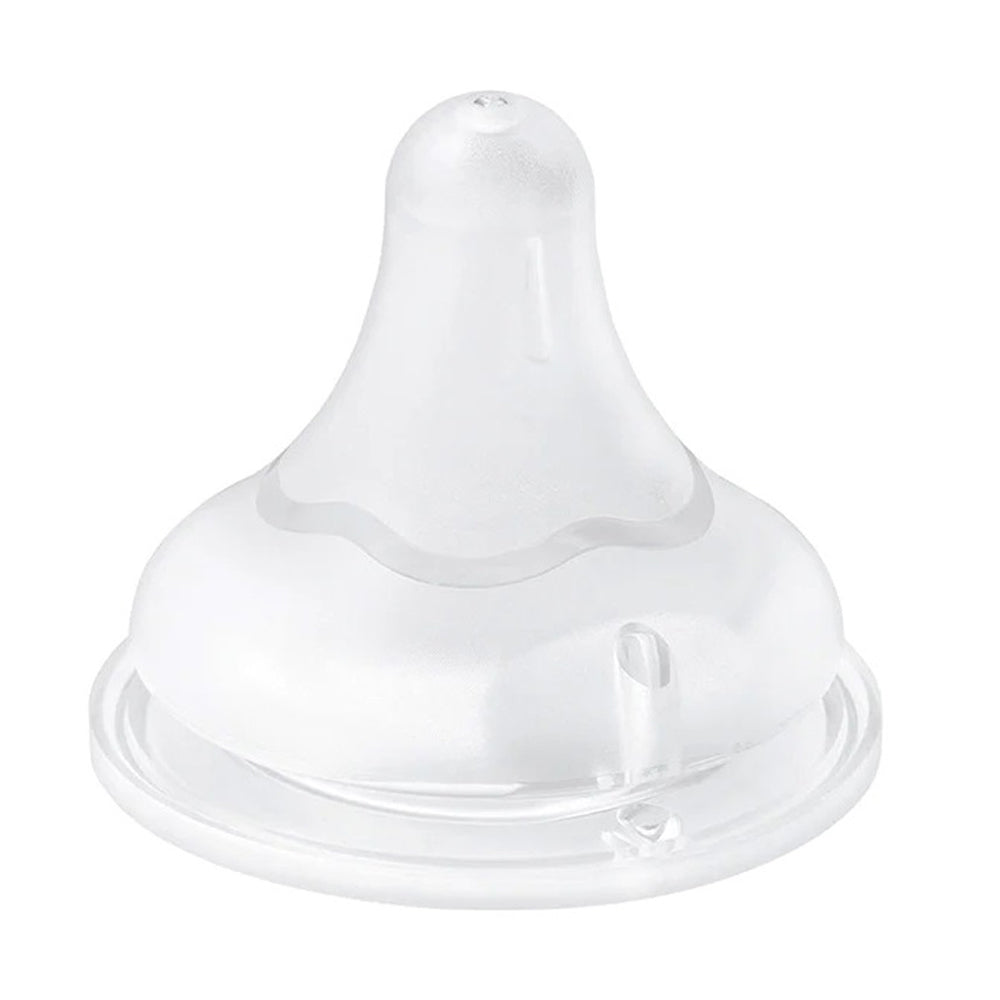


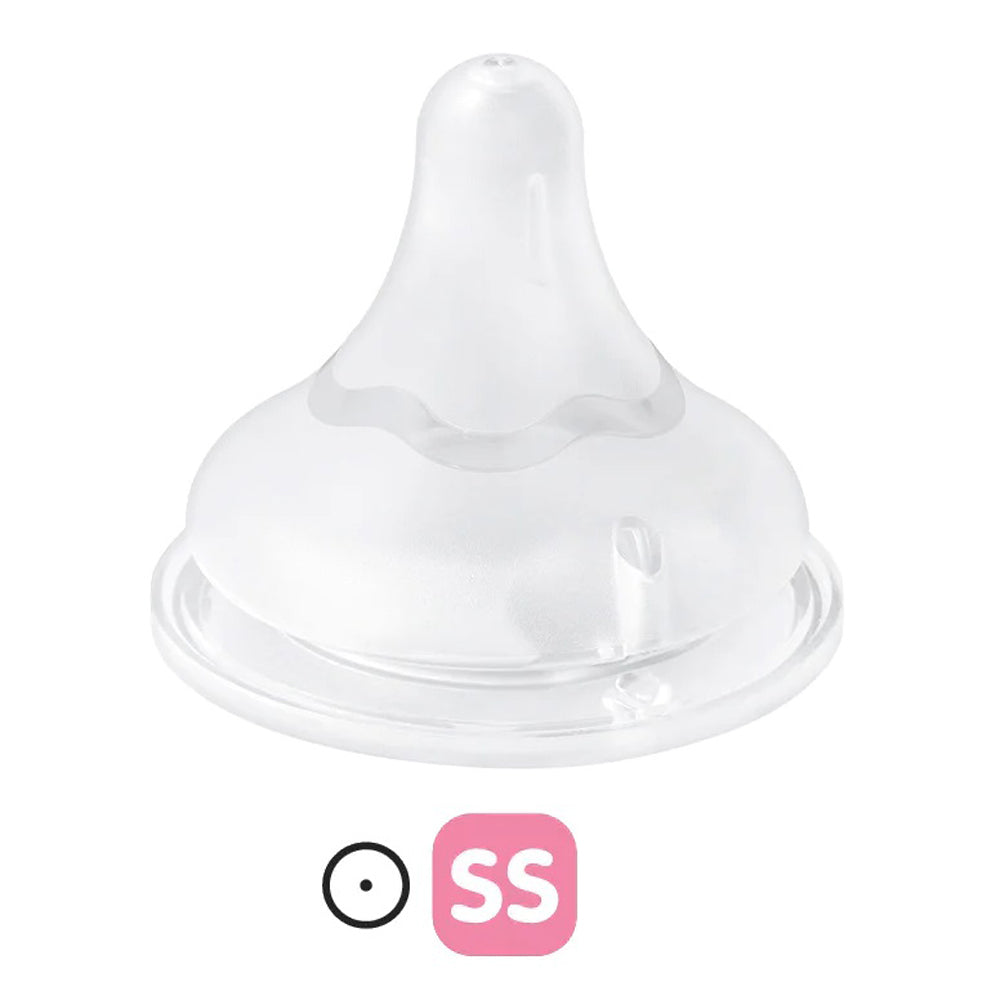


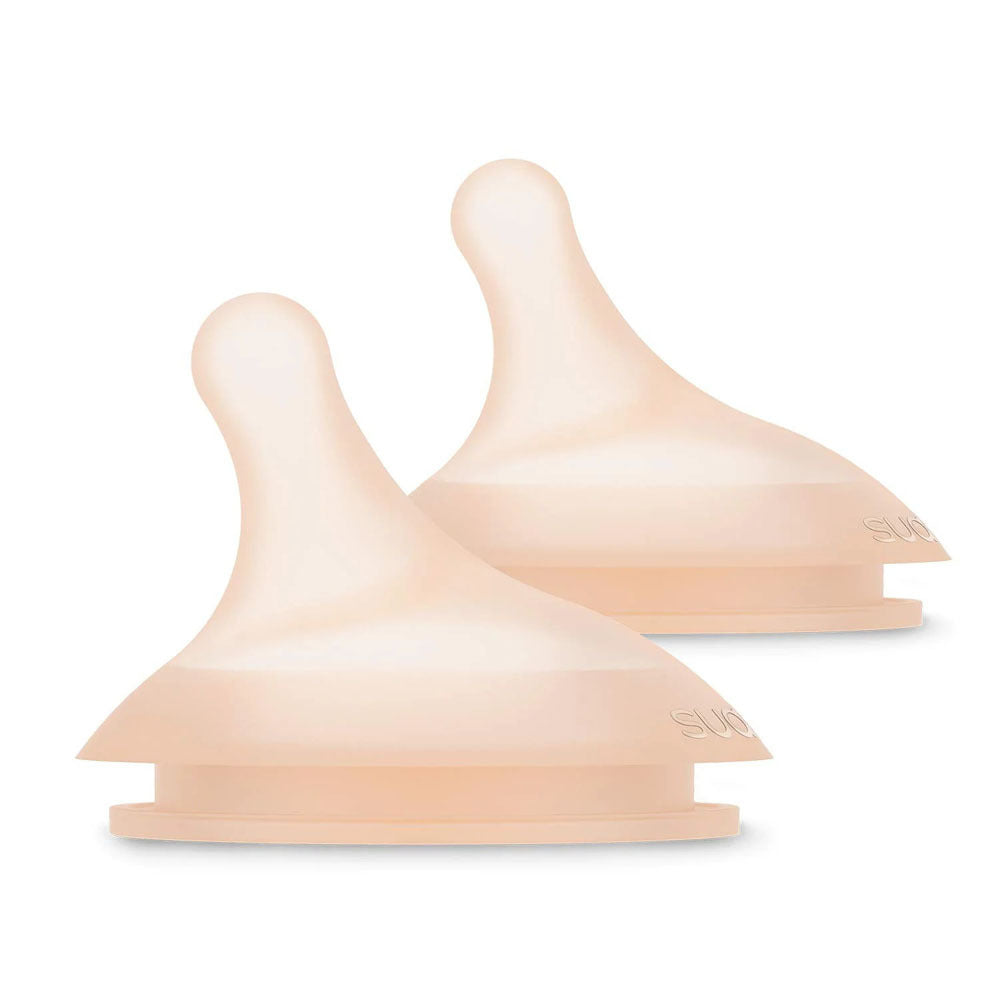


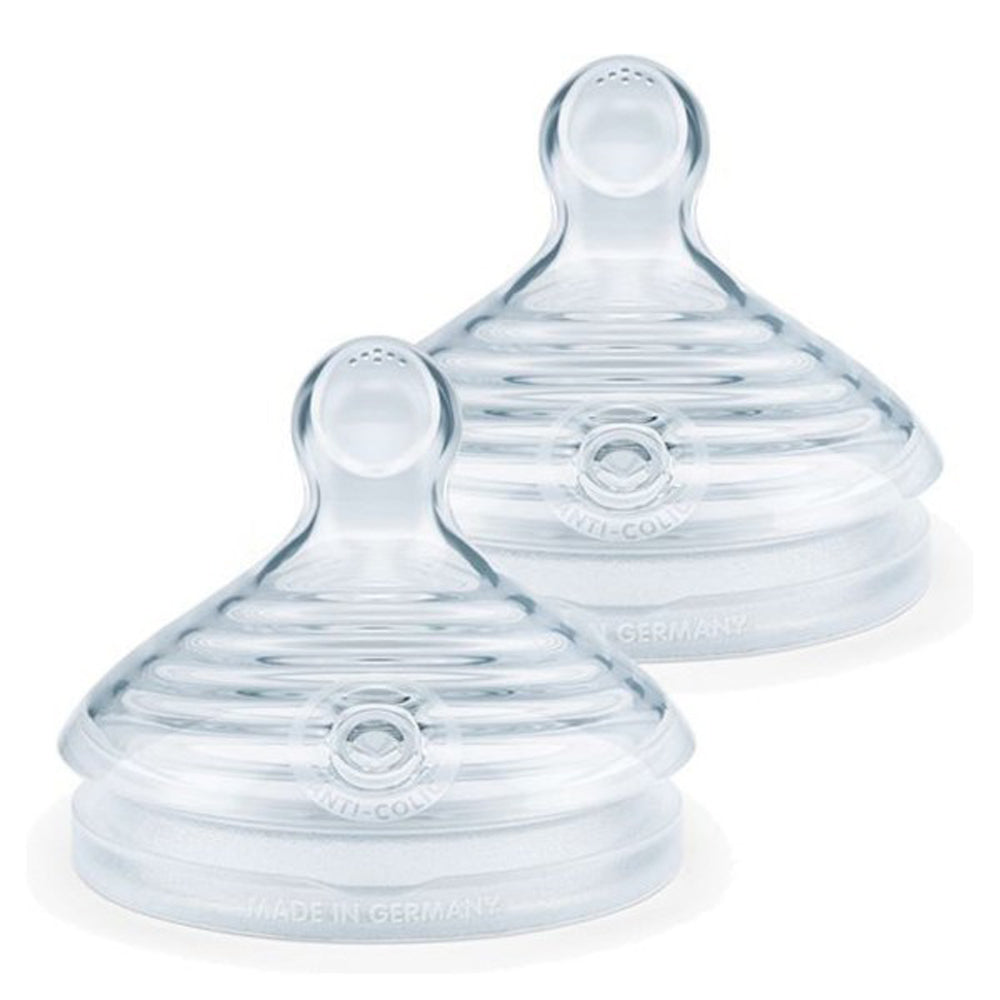


Flow rate describes how quickly milk passes through the teat, and matching it to a baby's age and development is one of the most straightforward improvements a parent can make to any bottle-feeding routine.
A newborn teat flows slowly - close to the effort required at the breast - giving a young baby time to pace the feed and swallow without gulping. Too fast a flow at this stage causes gagging, choking, and often significant post-feed discomfort.
As feeding becomes more coordinated - typically from around three to six months - a medium flow teat prevents the frustration of working too hard for too little. Fast-flow teats suit older babies drinking larger volumes more quickly and efficiently.
Many parents delay the upgrade beyond the point at which it's needed. A baby who seems frustrated, pulls off the bottle repeatedly, or takes far longer than expected to finish a feed may simply have outgrown the current flow rate - and moving up is often the simplest fix.
Bottle teats are made from either silicone or latex, and the difference matters. Silicone teats are firm, clear, odourless, and highly durable - they hold their shape, clean easily, and resist degradation through repeated sterilisation. For most families, silicone is the default choice for its longevity and consistency.
Latex teats are softer, more flexible, and amber-coloured - closer in feel and give to a natural nipple, which can make them easier for some babies to accept, particularly those moving between breast and bottle.
The trade-off is longevity: latex degrades more quickly with regular high-temperature sterilisation and needs checking and replacing more frequently than silicone. Neither material is universally better. The right one is whichever a baby accepts most comfortably and feeds from most settled.
Bottle teats don't last indefinitely, and replacing them regularly is one of those maintenance habits that costs very little and matters more than it seems. Silicone teats typically need replacing every two to three months with regular use; latex teats should be checked more frequently as the material thins and degrades faster.
A teat that has thinned, developed stickiness, cracked, or changed shape should be replaced immediately. Keeping teats fresh maintains both hygiene and consistent flow - a teat that has worn beyond its intended design delivers milk at an unintended rate, which undermines the benefit of having chosen the right flow in the first place.
Pigeon offers their peristaltic plus teat range across multiple flow rates and sizes - designed to mimic the natural sucking motion of breastfeeding, a meaningful consideration for families moving between breast and bottle.
Hegen provides their system-compatible teats across five configurations, covering every flow rate within their modular bottle range. Bibs Dummies rounds out the selection with latex teat options designed specifically for their glass bottle range - a natural-feel alternative for babies who prefer a softer teat - and these are just some of the bottle teat brands we carry.
The right teat is only as good as the bottle it fits. Browse the full bottle feeding range for everything else the setup needs:
Shop online with fast delivery Australia-wide, or visit our Alexandria or Miranda stores.