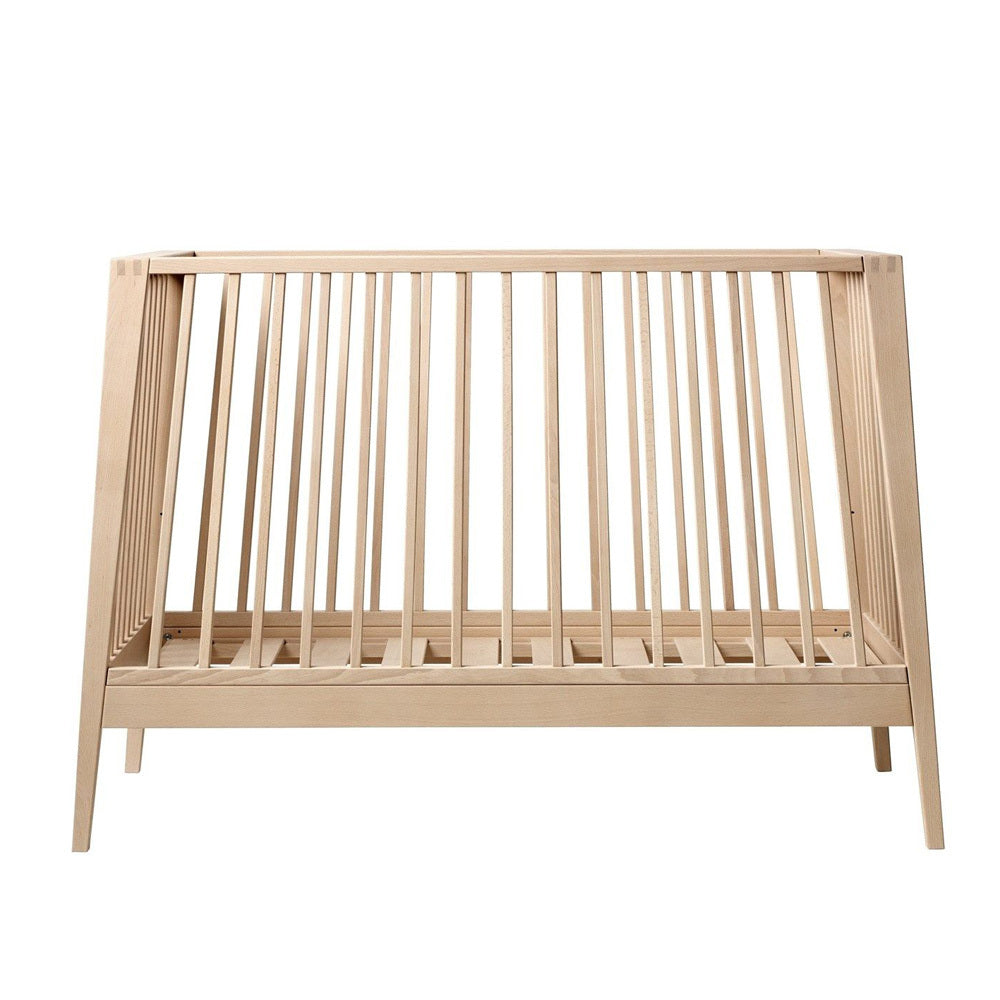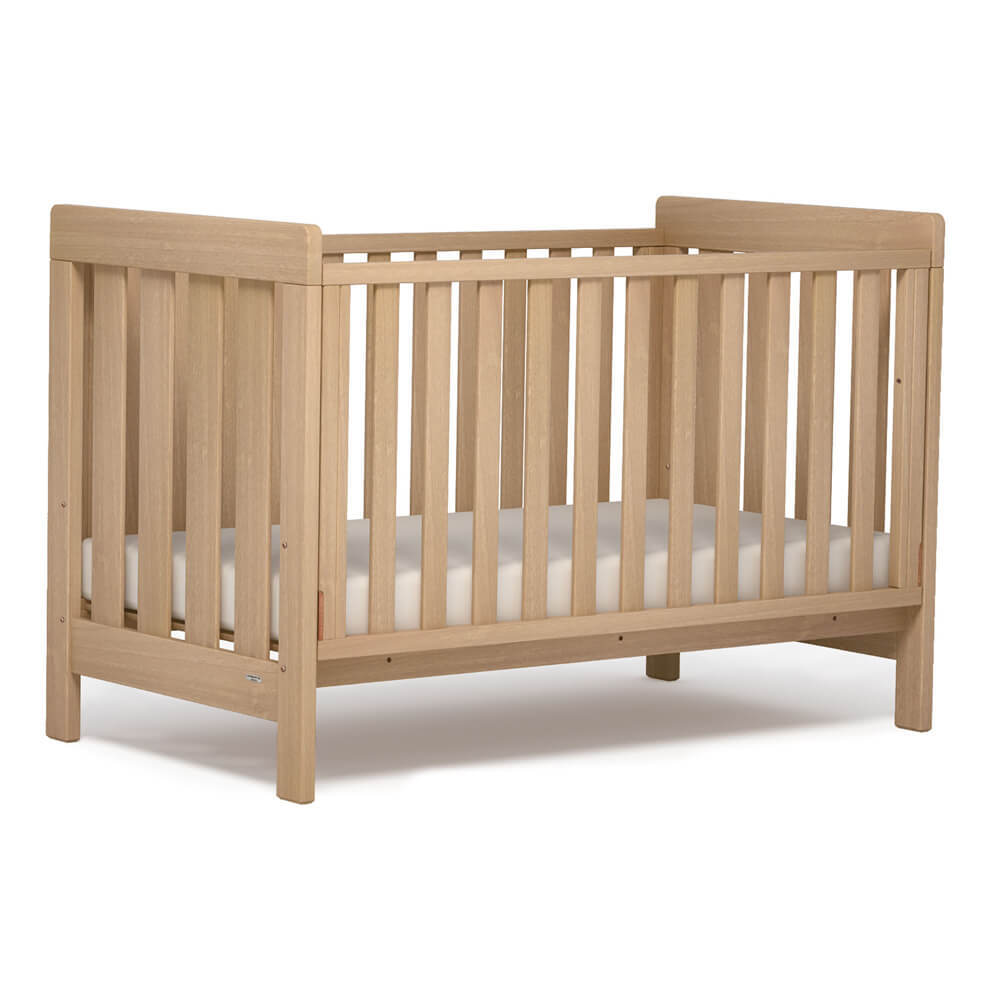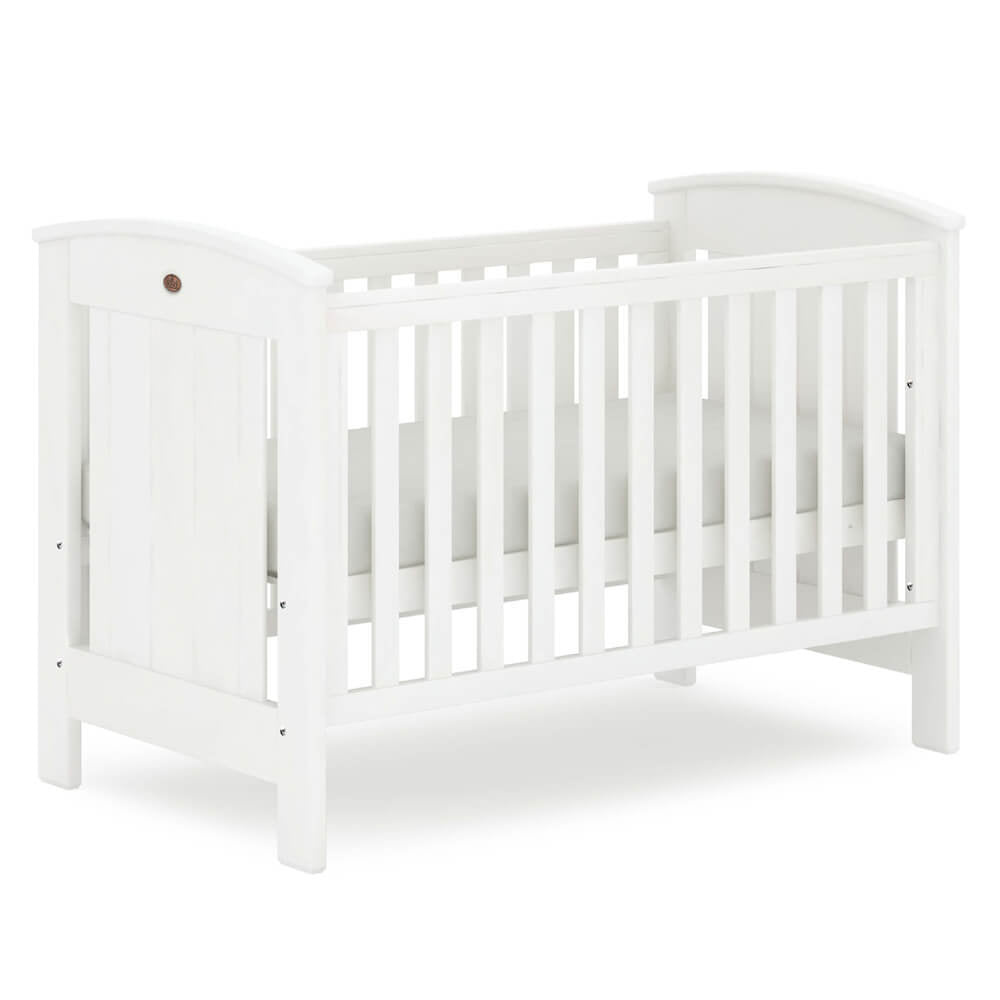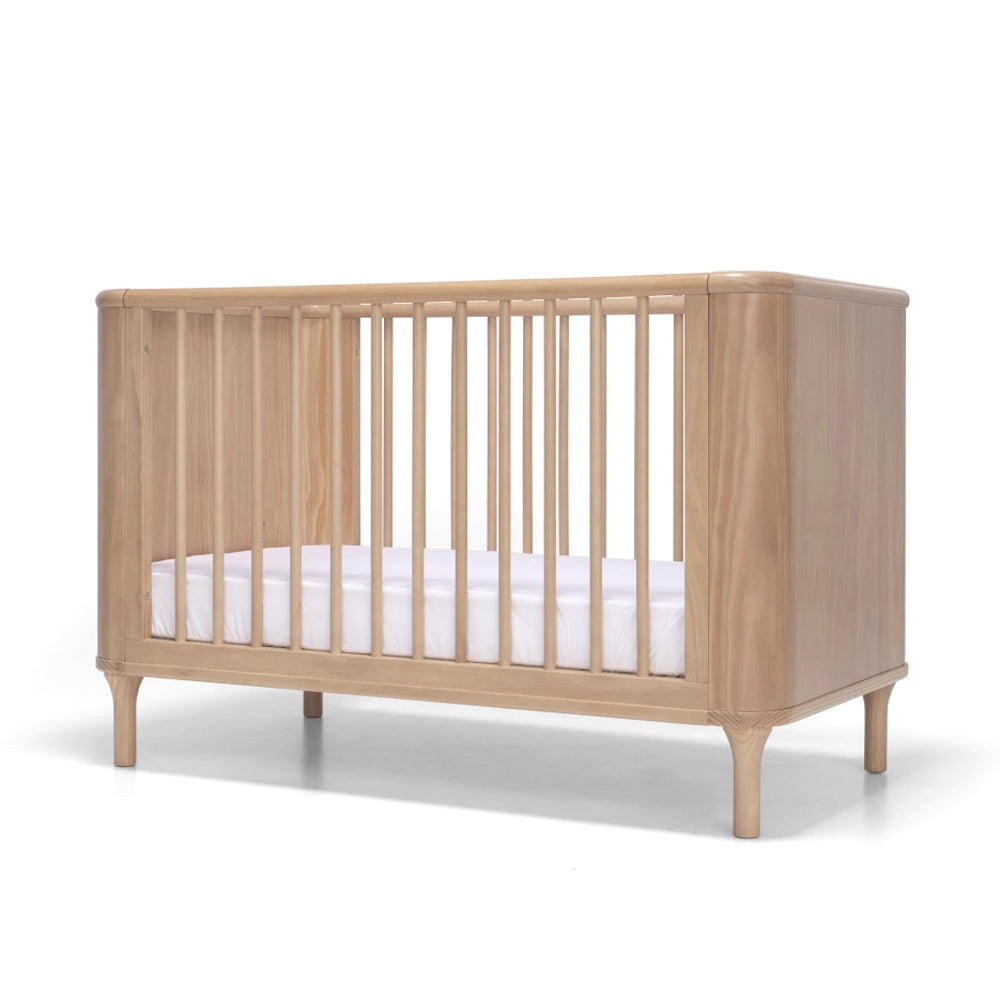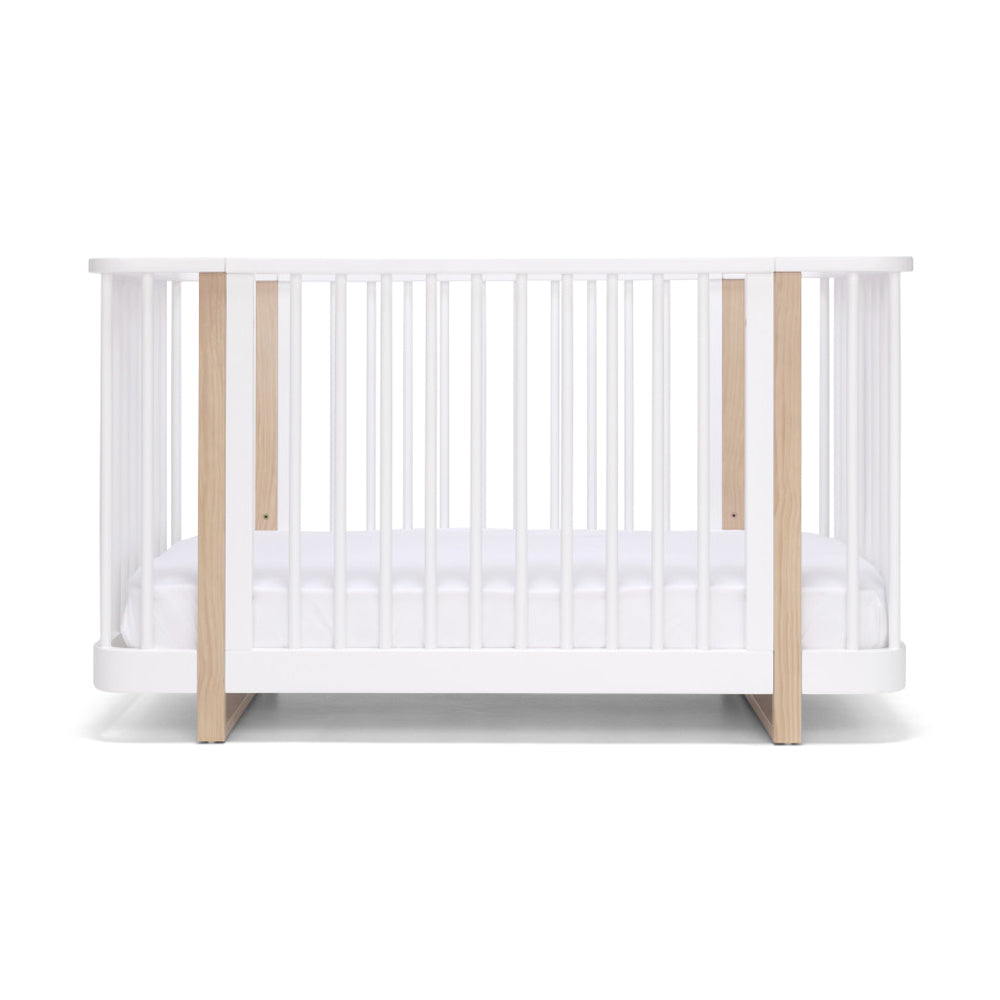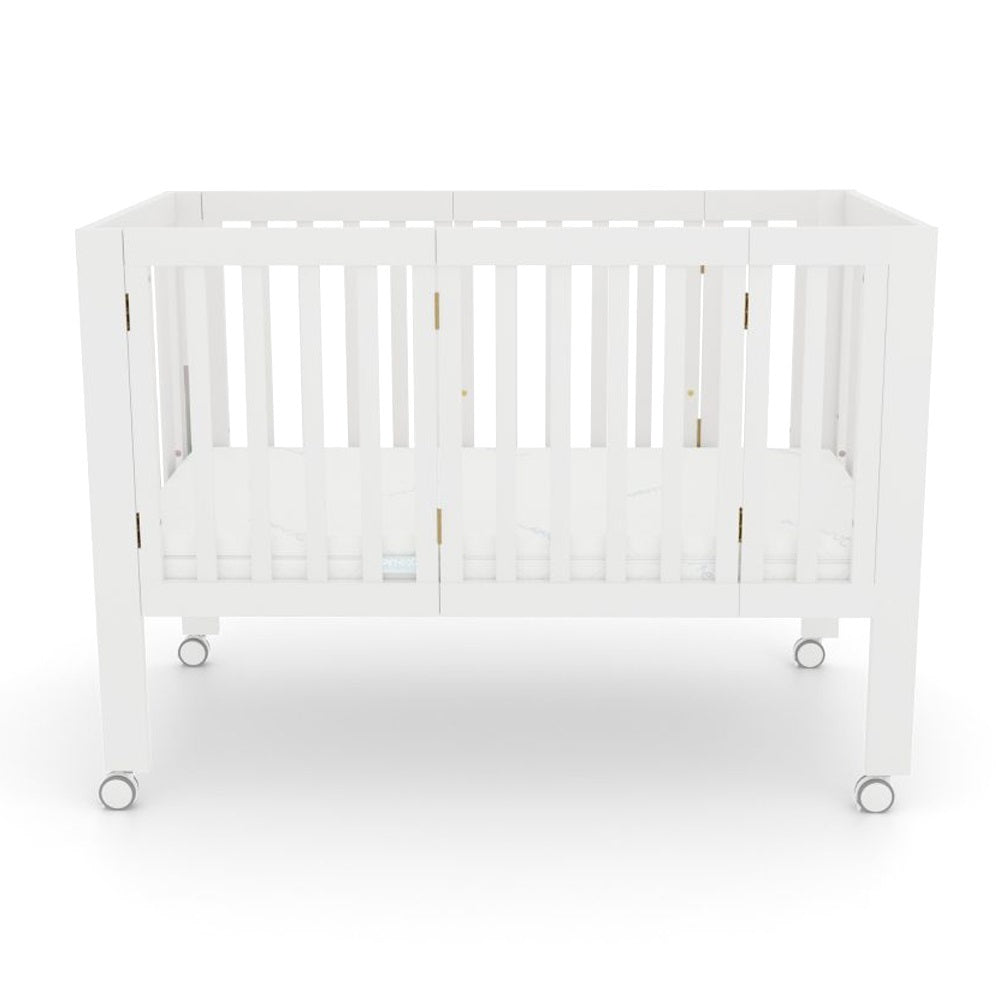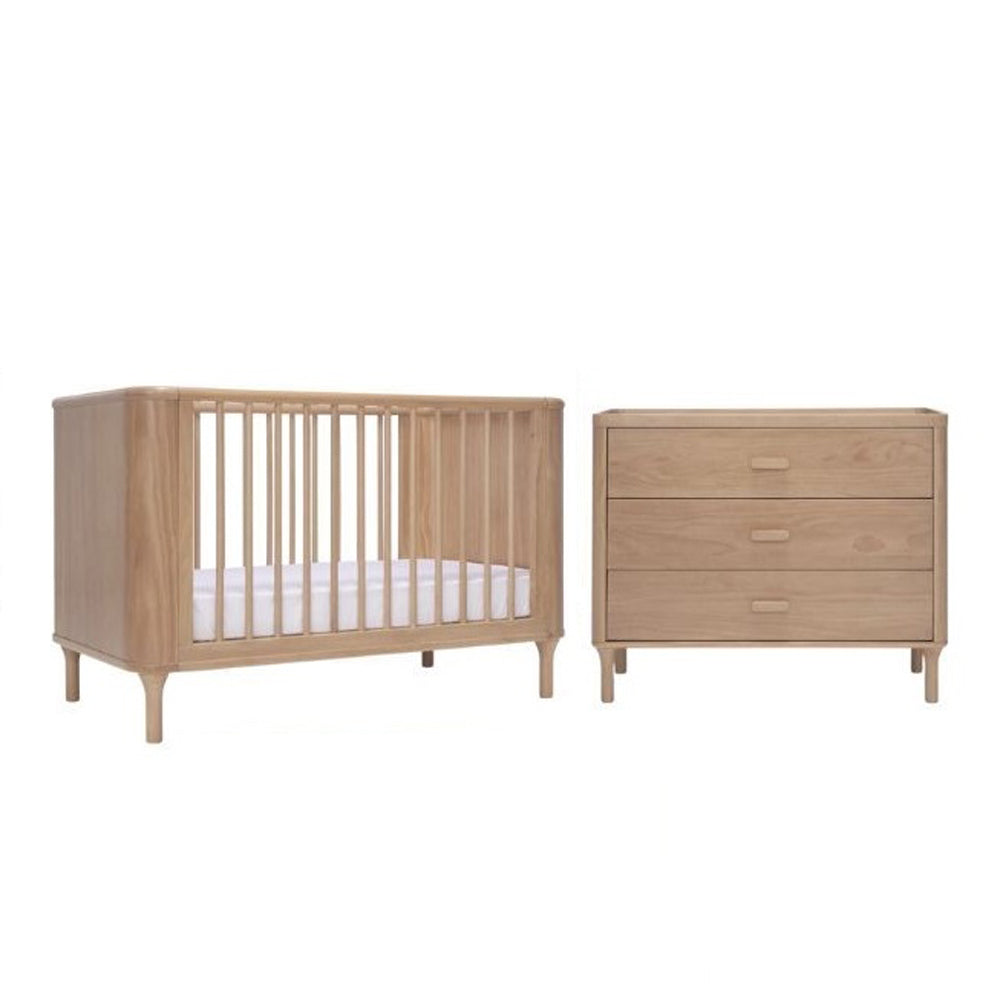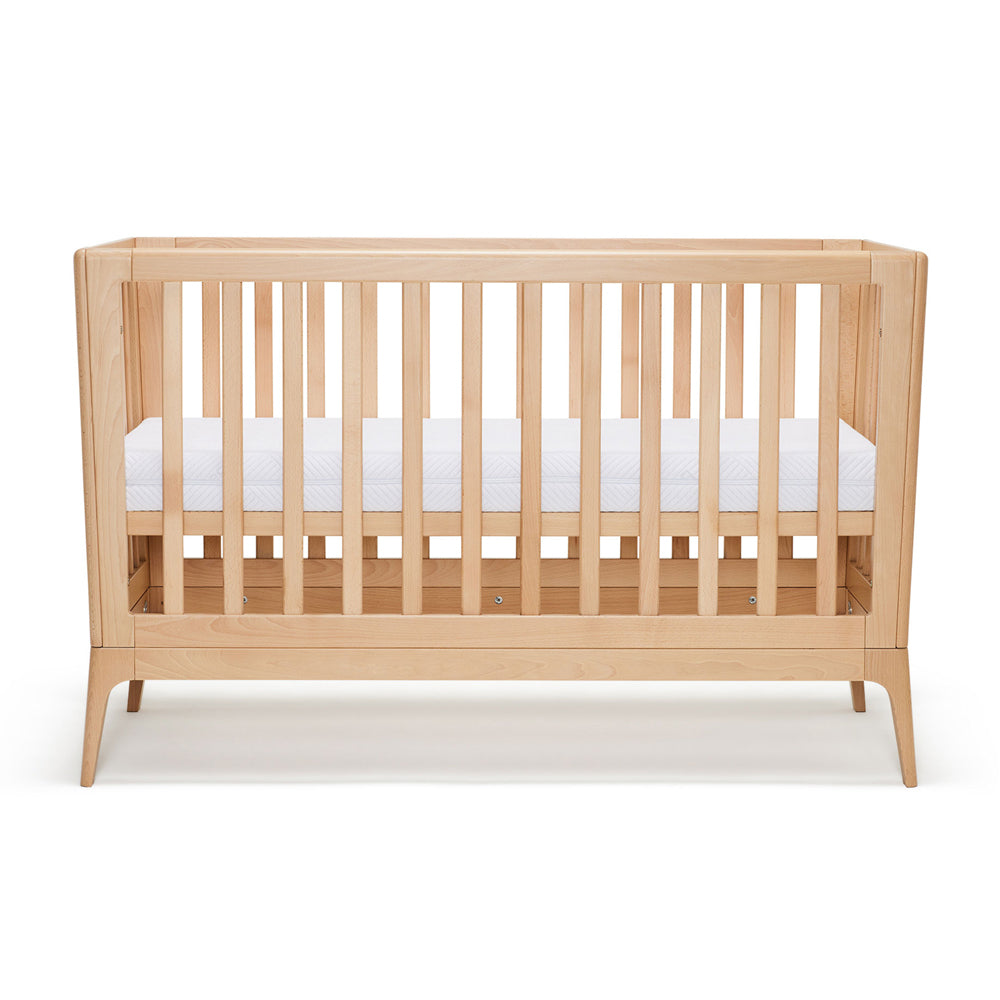

The cot is the one piece of nursery furniture that stays in the room the longest, and often the one that gets handed on afterwards. A wooden cot is chosen for that reason as much as any other. Timber takes years of use, marks in a way that looks lived in rather than damaged, and settles into a room instead of shouting at it.
Solid Timber, Engineered Wood and What Sits Between
A timber cot can mean several different things, and the difference shows up years later. Solid hardwood is the heaviest and the most forgiving of being dismantled and rebuilt, which matters if the cot will move house or pass to another child. Engineered wood panels keep the weight and the price down and hold a flat, even finish, which suits painted designs.
Many cots combine the two, using solid timber for the frame and rails that take the load and panels elsewhere. Look at the joins rather than the marketing. Cots that bolt together with metal fixings survive repeated assembly better than those relying on glued dowels, and that is the difference between a cot that gets a second life and one that does not.
Choosing a Finish That Ages Well
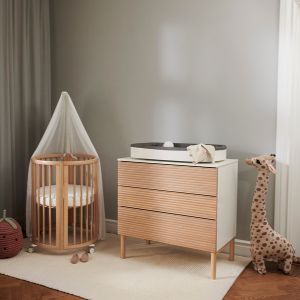
Finish decides how the cot looks on day one and how it looks after two toddlers have chewed the top rail. A natural wood cot in oak, beech or ash shows the grain and hides small scratches, since the damage is the same colour as the timber underneath.
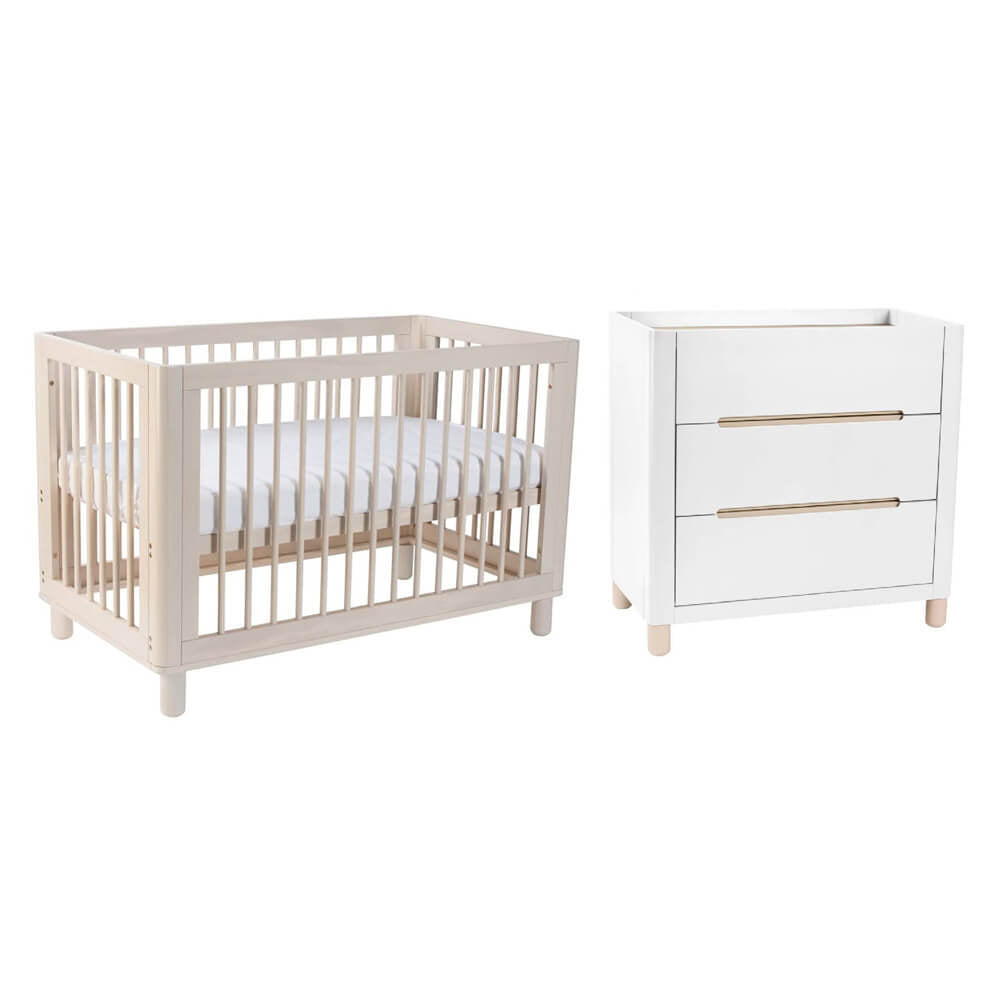
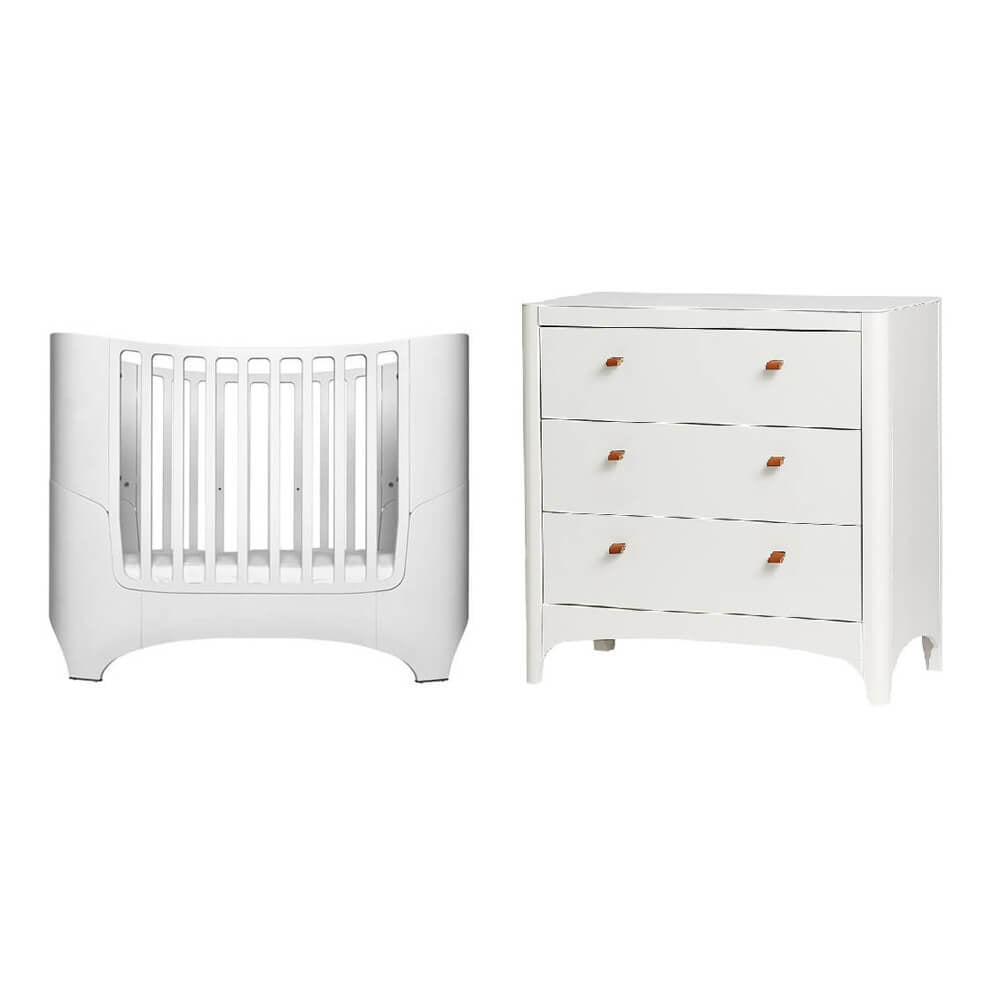
Dark wood cots in walnut or teak tones anchor a light room and suit homes where the rest of the furniture is warm-toned, though they show dust more readily. A white and wood cot splits the difference, pairing painted panels with timber legs and rails, which is the most flexible option when you do not yet know how the room will be decorated.
Whatever the finish, ask about the coating, since water-based and low-emission finishes are now standard on quality cots and worth confirming before you buy.
Cots That Convert and Furniture That Matches
Most wooden cots sold in Australia now convert, dropping a side to become a toddler bed and sometimes extending again into a junior bed. Timber suits that better than other materials, because the frame is strong enough to carry a four-year-old and the finish still looks right in a room that has moved on from nursery decor.
Matching dressers, change toppers and shelving usually come from the same range, so the room reads as a set rather than an accumulation. If you plan to build the room over time, check that the range you choose is likely to still be available in a year, and buy the mattress specified for the cot rather than a generic size, since timber cots vary more in internal dimensions than you might expect.
The Best Brands for Wooden Cots
Boori has built its name on solid timber and multi-stage conversion, with finishes designed to be lived with rather than replaced.Leander takes the Scandinavian route, with curved forms and pale timbers that suit a calm room.Mamas & Papas covers coordinated cot bed, dresser and mattress ranges in both painted and natural finishes.
Seena works in a contemporary style with sandstone and white timber pairings, andBabyRest brings Australian-made nursery furniture with local mattress sizing. These are just some of the brands we carry.
Building the Rest of the Room
Once the cot is chosen, the rest of the nursery tends to follow its lead. The mattress has to match the cot exactly, the dresser sets the tone for storage, and bedding is where the room finally starts to feel like somewhere a baby lives. Browse our full range of nursery, or work through the categories below:
- Cots
- Mattresses
- Dressers & Change Tables
- Cot Accessories
- Bedding
- Kids Furniture
- Nursery Bundles
- Nursery Decor
Every order is delivered Australia-wide, and you are welcome to see the timber finishes in person at ourAlexandria orMiranda stores.