



 New Arrivals
 Clearance
 GIFT CARDS


































The first few weeks of cup drinking are mostly water down the front of a singlet. That's how it goes for everyone, and it passes faster than you'd think. The right baby sippy cup makes the learning part shorter and the cleaning up afterwards a good deal less involved.
Around six months, when solids begin, is the usual point to introduce a cup, and there's no hurry about it. Offer small amounts of water with meals and let your baby explore it, including tipping it over, which they will. Some babies take to a cup within days and others need weeks of practice, and neither says anything about how they're developing.
If yours pushes it away entirely, put it aside and try again in a fortnight. The aim in the first year is simply familiarity, not replacing milk feeds, so there's no target to hit and nothing to worry about if progress is slow.
A spouted sippy cup is the traditional starting point, closest to a bottle teat and easy for small hands with side handles. Straw cups come next and are worth moving to reasonably early, since drinking through a straw uses the muscles that support speech development and doesn't encourage the tongue position a spout does.
Open cups are where you're heading eventually, and small ones designed for tiny hands make that step less daunting. Silicone models are forgiving when dropped on tiles, which they will be. Plenty of families work through all three types over eighteen months, and there's no need to buy them all at once.
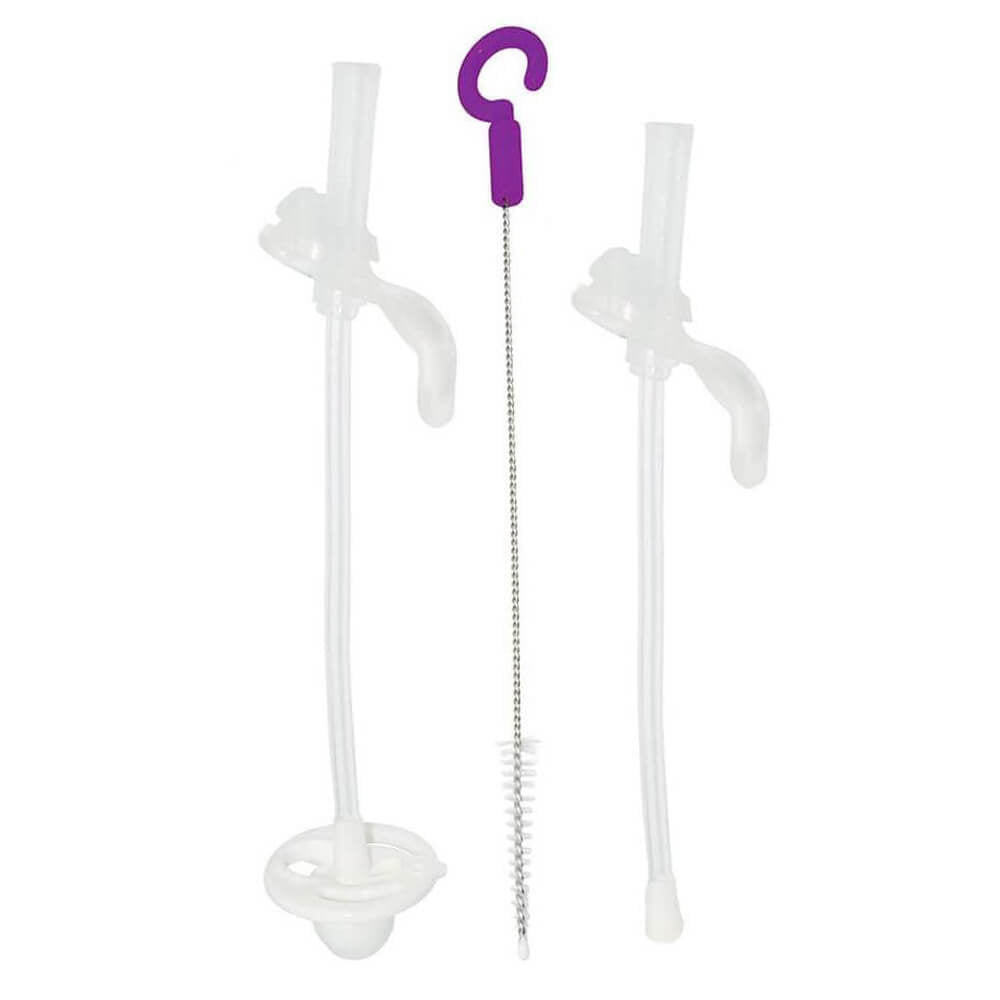
Every cup that seals well has a valve, and every valve is another part to wash. Fewer components means fewer places for milk to hide and less chance of finding something unpleasant a week later, so simple designs are worth choosing. Check whether replacement straws and seals are sold separately, because they're the parts that perish or vanish, and a cup you can keep in service is better value than one you replace whole.
Look for dishwasher-safe pieces and a wide opening you can get a brush into. For the pram or the nappy bag, a genuinely leakproof lid saves you a soaked change of clothes, though nothing survives being shaken upside down with real enthusiasm.
b.box is the Australian name most parents land on, with a spouted sippy cup in a long run of colours and replacement straws sold separately.Beaba brings French design to straw cups and learning cups that convert from a bottle shape.
OXO Tot applies its usual thinking about grip and ergonomics to water bottles for older toddlers.Medela makes a soft cup feeder for the very early days, andAll4Ella covers the silicone end. These are just some of the brands we carry.
A cup rarely arrives on its own. Once your baby's drinking from one, they're usually eating from a plate too, wearing a fair amount of it, and taking snacks out of the house. You'll find the lot in our baby feeding range, and here's what tends to follow a first cup:
Come and handle a few atAlexandria orMiranda, or order online and we'll post them out.